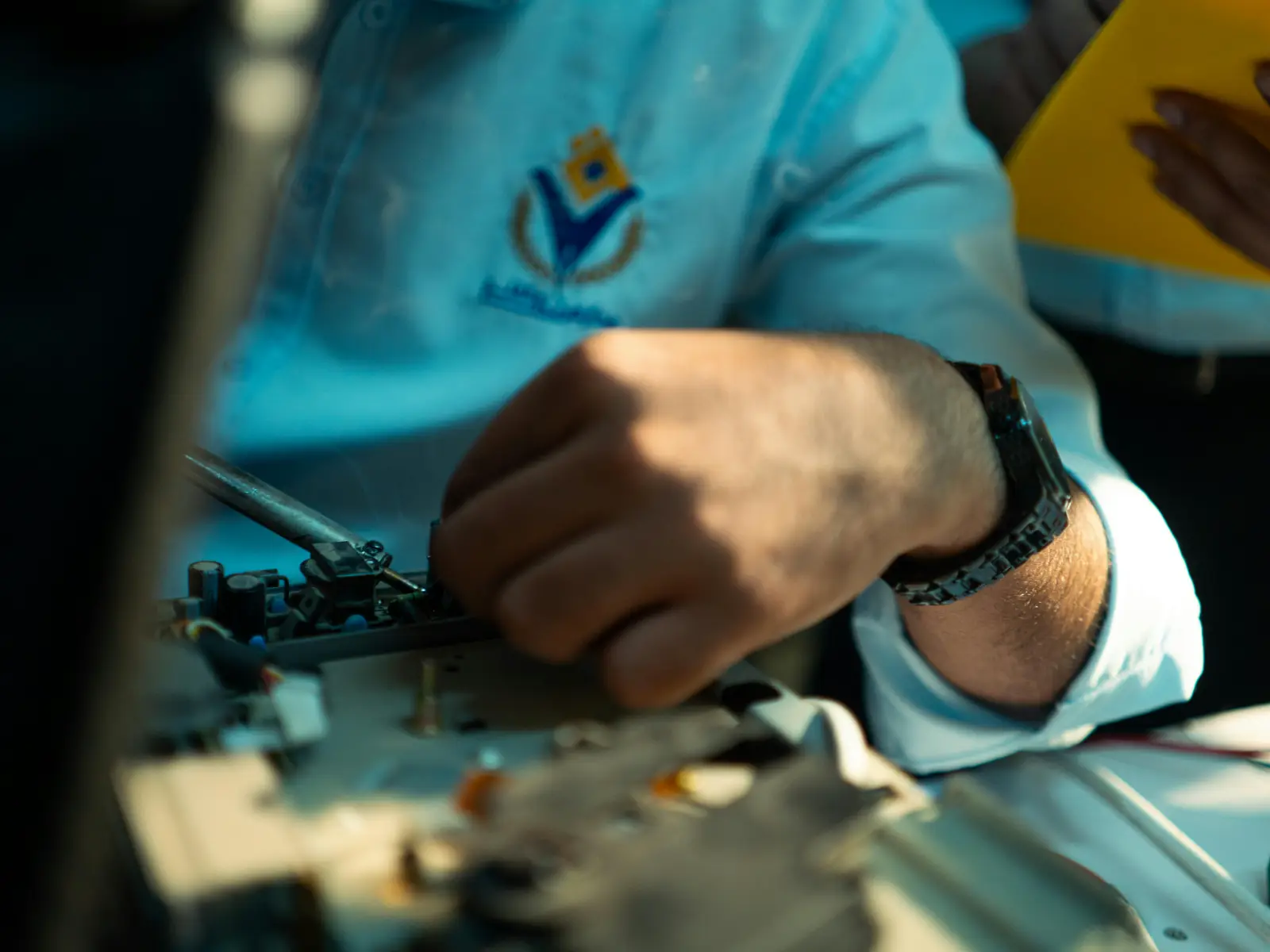
 In the field

Ten steps from inherited maintenance to a reliability programme.
The same structured sequence on every engagement. Your data in, a working strategy out.
Most consultancies start with workshops and opinions. We start with your data: P&IDs, O&M manuals and CMMS history. AI helps classify years of failure history. Engineers check everything against the plant, challenge it with your team and make the calls. Each step builds on the last, and you can stop at any point with something usable.
Full Systems
Assessment.
-
01
Asset register
We build or verify a structured register of every asset, its tag and its function. Engineers check every line against the drawings and the plant.
- Data we use
- P&IDs, O&M manuals, nameplates, your CMMS
- What you get
- A verified asset register, ready to load into your CMMS
-
02
Criticality
Every asset is rated C1 to C3 against safety, environmental and production consequence, system by system, in a criticality analysis drawing on NORSOK Z-008 and ISO standards. Draft ratings are tested in short workshops with your team.
- Data we use
- The asset register, P&IDs, operating context
- What you get
- A criticality register with a written reason for every rating
-
03
Failure history
We quantify how your assets have actually failed. AI classifies years of free-text work orders into failure modes, which most CMMS histories never record properly.
- Data we use
- CMMS work orders, downtime logs, shift notes
- What you get
- A clean failure history by asset and failure mode
-
04
Reliability analysis
Weibull, exponential and Poisson modelling show whether each asset type fails early, at random or through wear-out. That decides whether time-based maintenance helps at all. Where your own history is thin, OREDA industry data fills the gap.
- Data we use
- The cleaned failure history, plus OREDA data where history is thin
- What you get
- Failure patterns and life estimates for each asset type
-
05
Reliability scoring
Consequence and likelihood come together on one risk ranking, so effort goes first to the assets carrying real risk.
- Data we use
- Criticality and reliability results
- What you get
- A risk-ranked asset list and where to act first
-
06
Spare parts
Stock is aligned to criticality, actual failure rates and supplier lead times. AI matches part descriptions to the assets that use them.
- Data we use
- Stores records, BOMs, lead times
- What you get
- A critical spares list and stocking recommendations
-
07
HAZID / HAZOP
Hazards around critical assets and planned changes are identified and recorded, facilitated by engineers who know the equipment.
- Data we use
- P&IDs, procedures, the risk ranking
- What you get
- A hazard register with actions and owners
-
08
Condition monitoring
Baselines are reset and a monitoring plan is set for the failure modes that give a detectable warning.
- Data we use
- FMECA results, existing monitoring data
- What you get
- A monitoring plan: techniques, frequencies, alarm limits
-
09
Implementation
New strategies, tasks and spares go into your CMMS, and corrective actions are rolled out with your team. We stay until it works.
- Data we use
- Everything above
- What you get
- An updated CMMS and a tracked action plan
-
10
Lifecycle upgrade
A long-term plan for each major asset: repair, refurbish, life-extend or replace, with cost and timing.
- Data we use
- Condition, risk and cost data
- What you get
- Lifecycle plans you can budget against

No failure history?
We use OREDA.
Many plants have never recorded enough failures to give a realistic likelihood of failure. Where your own history is thin, we use OREDA, the energy industry's reliability database built from over four decades of offshore and onshore equipment records, to set realistic failure rates. As your own data builds, it takes over.
About OREDAOne team.
No handoffs.
Integrated expertise
One team covering design, maintenance and reliability, no handoffs, no gaps, no diluted accountability. Everything connects because everyone is talking to each other.
Industry-led
Our engineers have worked in the sectors we serve. We understand your operational reality, the pressures, the constraints, the standards you're held to.
Outcome focused
Every engagement is measured against real engineering outcomes, not just deliverables. Uptime, reliability, cost avoidance. That's what we track and report against.
Not sure where to start?
Start with the problem.
PM work never gets finished
More planned work than hours to do it.
Spares cost too much, or are never there
Cash on the shelf, but not the part you need.
Our asset data is a mess
Registers, manuals and CMMS do not agree.
Ageing plant, unclear future
Repair, refurbish or replace, and when.
New project or modification
Plant that is ready to maintain from day one.
Put the method
to work.
Start with a conversation. We'll listen, ask the right questions, and tell you honestly where we'd begin.
Start the conversation